Les actualités de la BRVM en Flux RSS
Nous agrégeons les sources d’informations financières spécifiques Régionales et Internationales. Info Générale, Economique, Marchés Forex-Comodities- Actions-Obligataires-Taux, Vieille règlementaire etc.
Enjoy a simplified experience
Find all the economic and financial information on our Orishas Direct application to download on Play StoreZambia has taken a new step in strengthening of its regional logistical integration. The Zambian Minister of Transport and Department of Logistics, Museba Frank Tayali, signed on Thursday, January 22, 2026 with the Southern African Development Community (SADC) Secretariat a memorandum of understanding relating to the North-South corridor, as well as a framework agreement on the Beira development corridor.
According to the SADC Secretariat, these agreements aim to” improve the efficiency of freight transport, promote trade intra-regional and international, and support the transformation of corridors of transport in smart economic corridors”. Their implementation should contribute to job creation, industrialization and growth sustainable economic situation in the whole region.
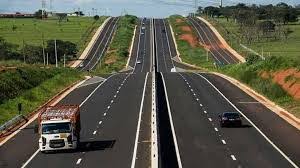
Landlocked country, Zambia depends heavily on infrastructure regional sources for its supply and international exchanges. The As such, North-South corridor is one of the main arteries. trade in southern Africa, also connecting certain regions from East and Central Africa. It represents the main entrance door international network of the Zambian railway network.
Spanning seven SADC member states and interconnected to eight regional corridors, the North-South corridor concentrates approximately 60% of the region's trade flows and directly serves nearly 50% of the population of the community area, with economic benefits in the long term for all the countries concerned.
For its part, the Beira Development Corridor occupies a strategic position for maritime access. Its modernization should expand exchange opportunities with COMESA and SADC countries and those residents of the Indian Ocean. Connected to the Lobito corridor, it reinforces the complementarity between regional ports and improves logistical fluidity.
Through these agreements, Lusaka confirms its desire to
become more entrenched in regional value chains and to make
transport infrastructures a central driver of competitiveness and
economic transformation.
Vous devez être membre pour ajouter un commentaire.
Vous êtes déjà membre ?
Connectez-vous
Pas encore membre ?
Devenez membre gratuitement
10/07/2026 - Secteurs
10/07/2026 - Secteurs
10/07/2026 - Secteurs

09/07/2026 - Secteurs
10/07/2026 - Secteurs
10/07/2026 - Secteurs