Les actualités de la BRVM en Flux RSS
Nous agrégeons les sources d’informations financières spécifiques Régionales et Internationales. Info Générale, Economique, Marchés Forex-Comodities- Actions-Obligataires-Taux, Vieille règlementaire etc.
Enjoy a simplified experience
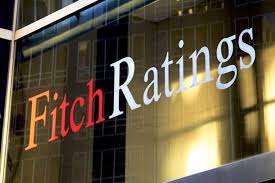
Find all the economic and financial information on our Orishas Direct application to download on Play StoreThe Fitch Ratings agency comes to raise the long-term issuer default rating in foreign currencies of Ivory Coast. It went from “BB-” to “BB” with “Stable outlook.”
Fitch Ratings explains the reasons for
This upward revision due to several positive factors, including uncertainty
policy linked to the presidential election that “has disappeared”. According to Fitch Ratings,
The election saw only limited turmoil, “a sign that the country is running out of control.
page on its history of serious civil unrest related to the elections.” To that,
In addition, the confirmation of the re-election of President Ouattara for five
years and the commitment of his government to the sustained reform program
by the IMF and the National Development Plan 2026-2030, guarantee the
continuity of macro-budgetary management.
The rating agency is planning a
real GDP growth of 6.4% in 2025, 6.5% in 2025, 6.5% in 2026 and 6.6% in 2027, “clearly
higher than the median of forecasts for countries rated “BB” (3.5-3.9
%) for the period”. Also, the Ivorian mining sector, a driver of
growth is expected to grow, at least, to 6.7% per year, beyond
2027. Added to this is the positive impact of developments in the sectors
oil and gold.
Fitch Ratings reports that “the rating Ivory Coast's “BB” reflects strong growth, a sound fiscal management and solid macroeconomic policies, illustrated by a long period of low inflation and supported by a strong commitment with the IMF.”
The other positive aspect in
macroeconomic indicators of Côte d'Ivoire, it is the “stabilization
of the deficit to 3%” in 2025 against 4.0% in 2024, thanks to tax revenues
generated by the 2024-2028 mobilization strategy.
Vous devez être membre pour ajouter un commentaire.
Vous êtes déjà membre ?
Connectez-vous
Pas encore membre ?
Devenez membre gratuitement

10/07/2026 - Economie/Forex

09/07/2026 - Economie/Forex

09/07/2026 - Economie/Forex
08/07/2026 - Economie/Forex

08/07/2026 - Economie/Forex
06/07/2026 - Economie/Forex
06/07/2026 - Economie/Forex

03/07/2026 - Economie/Forex

01/07/2026 - Economie/Forex
10/07/2026 - Economie/Forex
09/07/2026 - Economie/Forex
09/07/2026 - Economie/Forex