Les actualités de la BRVM en Flux RSS
Nous agrégeons les sources d’informations financières spécifiques Régionales et Internationales. Info Générale, Economique, Marchés Forex-Comodities- Actions-Obligataires-Taux, Vieille règlementaire etc.
Enjoy a simplified experience
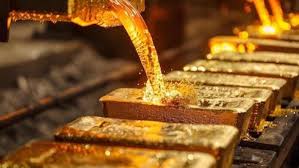
Find all the economic and financial information on our Orishas Direct application to download on Play StoreThe Malian mining sector is going through a zone of turbulence. In 2025, industrial gold production fell by 22.9%, plunged by the continuing tensions between the State and mining giants, including the group Canadian Barrick Gold.
One of the largest gold producers on the continent sees its
numbers turn red. According to provisional data from the Ministry of Mines
consulted on Thursday, industrial production fell to 42.2 tons
metric tons, compared to 54.8 tons in 2024. We are far from the peak of 66.48 tons
recorded in 2023.
This spectacular fall is the direct consequence of a
change in sovereign strategy. Since 2023, Mali has introduced a new
mining code aimed at capturing a greater part of the value generated by its
resources. If this tightening allowed the government to recover 761
billion FCFA (1.2 billion dollars) in arrears after a massive audit in
December, it also destabilized the industry.
The breaking point has been reached with Barrick Gold. The The giant Loulo-Gounkoto complex was placed under provisional administration after two years of regulatory tug-of-war. Although an agreement has been reached In 2024, the logistical and operational consequences were severe: the production of the complex reached only 5.5 tons in 2025, compared to 22.5 tons the previous year.
B2Gold takes the lead in the ranking
This industrial earthquake has upset the hierarchy of
producers. B2Gold is now the country's leading producer with
17.5 tons. It was followed by Allied Gold, which climbed to second place with
9.58 tons thanks to the contribution of its new Korali-Sud mine. Barrick, formerly
undisputed leader, regressing to third place.
Artisanal production, on the other hand, remained stable at six tons. In total, Malian domestic production stood at 48.2 tonnes in 2025, representing a deficit of 22.7% compared to the target of 54 tonnes that the government had set for itself.
Despite the arrival of new players and the expansion of
Some small-scale mines, uncertainty related to reforms seems to have
has had a lasting impact on the morale and efficiency of the sector, compromising
short-term growth forecasts.
Vous devez être membre pour ajouter un commentaire.
Vous êtes déjà membre ?
Connectez-vous
Pas encore membre ?
Devenez membre gratuitement

10/07/2026 - Matières Premières
10/07/2026 - Matières Premières
10/07/2026 - Matières Premières

09/07/2026 - Matières Premières

09/07/2026 - Matières Premières
08/07/2026 - Matières Premières

08/07/2026 - Matières Premières
08/07/2026 - Matières Premières

06/07/2026 - Matières Premières
10/07/2026 - Matières Premières
10/07/2026 - Matières Premières
10/07/2026 - Matières Premières