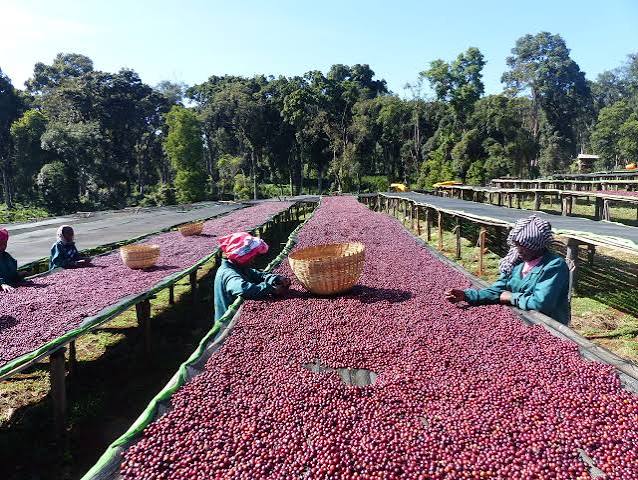
Italy is accelerating its presence in the Ethiopian agricultural sector. The Italian Trade Agency (ICE) is negotiating with the Ethiopian Chamber of Commerce and Sectoral Associations (ECCSA) to establish mechanisms to facilitate the acquisition of Italian agricultural machinery by local companies. This information, reported on July 15 by Birr Metrics, comes as financing remains the main obstacle to sector modernization.
According to Italian Trade Commissioner Claudio Pasqualucci, discussions are focused on financial solutions to reduce the cost of access to equipment such as tractors, which remain unaffordable for many farmers and mechanization service providers. No device has been officially announced yet, but the establishment of financing lines appears essential to boost commercial exchanges.
Beyond the export of equipment, Rome has broader industrial ambitions. Italian manufacturers are studying the creation of assembly lines, and ultimately, manufacturing units in Ethiopia to serve not only the national market but also neighboring countries.
« The next step is to allow Italian manufacturers to set up assembly lines and, in the future, manufacturing plants in Ethiopia, » said Fabio Ricci, deputy general manager of FederUnacoma, the Italian association of agricultural machinery manufacturers. According to him, Ethiopia is a strategic platform for serving the entire Horn of Africa.
This strategy is part of a long-term effort to strengthen Italy's industrial presence in one of Africa's largest agricultural economies. It is already based on concrete investments. In December 2025, McCormick Tractors, a subsidiary of Argo Tractors Group, entered the Ethiopian market by signing a partnership with local conglomerate Kerchanshe Group.
This agreement gives Kerchanshe the status of exclusive distributor of McCormick tractors in Ethiopia, with responsibility for marketing, after-sales service, and local network development.
For Italian industrialists, the stakes go beyond the simple sale of equipment. By facilitating access to financing and developing local production capacity, they aim to establish themselves durably in a high-potential market, while making Ethiopia a regional export base for East African economies.

Comments 0
You must be a member to add a comment.
Already a member? Sign in
Not a member yet? Become a member for free
No comments on this article yet.