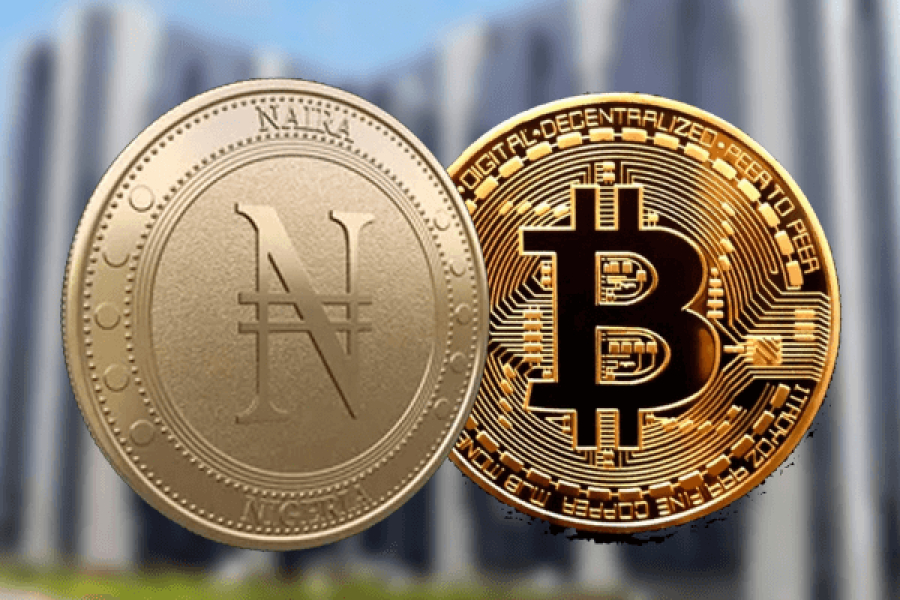
Nigerians are increasingly adopting stablecoins, digital assets pegged to the US dollar, for international money transfers. According to an analysis published by the International Monetary Fund, these cryptocurrencies, once used by a minority of insiders, have become a major payment channel for households and small businesses seeking faster and cheaper solutions than traditional financial circuits.
According to IMF data, Nigeria recorded nearly $59 billion in cryptocurrency inflows between July 2023 and June 2024. This volume represents approximately 60% of stablecoin transactions in sub-Saharan Africa, confirming Nigeria's central role in the adoption of digital assets on the continent.
Stablecoins are cryptocurrencies whose value is backed by reference assets, usually the US dollar, to limit the sharp fluctuations seen in other digital assets. Their popularity has grown worldwide in recent years, supported by a more favorable regulatory environment in the US and increasing interest from investors and tech companies.
In Nigeria, their success is largely due to their ability to offer near-instant cross-border transfers via smartphones and digital wallets. They also allow users to preserve their purchasing power in a context marked by persistent naira volatility, the national currency.
The IMF also highlights the economic advantage of these digital solutions. Stablecoins offer an alternative to traditional money transfer networks, whose costs remain high. According to World Bank data cited by the institution, sending $200 to sub-Saharan Africa costs an average of nearly 9% of the amount transferred, compared to a global average of around 6%.
However, the rapid expansion of these digital assets also raises concerns for monetary authorities. The IMF estimates that increased use of dollar-pegged tokens could reduce naira demand and weaken the effectiveness of national monetary policy.
The institution also warns about the challenges of financial supervision. The development of transactions via digital wallets makes it more complex to track financial flows and could increase the risks of money laundering or illicit capital movements.
Faced with this rise in stablecoins, Nigeria thus faces a double challenge: to take advantage of the opportunities offered by financial innovation while preserving the stability of its monetary and financial system.

Comments 0
You must be a member to add a comment.
Already a member? Sign in
Not a member yet? Become a member for free
No comments on this article yet.